Note this is the second part in my series on the nature pyramid, the land ethic and pro-environmental behavior.
In this article I explore the nature pyramid and the relationship between nature exposure, connectedness and pro-environmental behavior. I also consider ways to expand these ideas and their relevance to the larger issues of sustainability.
Defining the Nature Pyramid
The idea of the nature pyramid is still relatively new. Yet, it represents a potentially useful contribution for thinking about the relationship between human health, and nature in our lives. The basic premise suggests increased amounts of nature exposure will positively influence physical and mental well-being. As an example, the image below represents Tim Beatley's interpretation of the Nature Pyramid (See also: "Growing the Biophilic City"), which considers the scale, frequency, duration and intensity of immersion in nature. This is similar in terms of the foods we eat, how much of them, how often and so forth.

The relationship between the nature pyramid and food pyramid may not be conceptually equivalent. But the concept provides a way to think about types of nature exposure, and impacts on people. As Beatley also suggests, it also highlights the importance of the ways we design urban spaces to include opportunities for residents to have access to various types of nature within their daily lives. Increasing the opportunities that urban residents have to interact with nature could be a critical feature to increasing urban well-being, as well as cultivating more empathetic concern for the environment.
There is already evidence suggesting a relationship exists between nature exposure and positive measures of human health and well-being. Keith Tidball at Cornell University has been looking at the benefits of nature exposure on stress reduction among returning veterans with PTSD and other traumatic injuries ('Greening in the Red Zone'). Researchers have also found that experience with nature has a positive influence on a sense of connection to nature and well-being (Why Is Nature Beneficial?).
Connectedness and Attention/Intention
This sense of connection is critical, and it speaks to the formation of empathy and reverence for nature. Essentially, nature connectedness can be thought of as the affective, or underlying sense of partnership and self-other overlap that a person feels towards the environment. And it is here, at the intersection between nature experience and nature connectedness, that we find insight into the formation of a 'land ethic' (The connectedness to nature scale).
Although environmental education programs can increase nature connectedness (Promoting connectedness with nature through environmental education), we also know from previous research that nature connectedness is positively correlated with nature exposure in general. Past research also shows that nature connectedness is positively associated with pro-environmental behavior such as recycling, organic food consumption, and gardening for sustainability (See Chapter 4).
However, we don't know what types of nature exposure increase these sensibilities, including the level or frequency and scale of experiences that influence nature connectedness. The nature pyramid provides a framework for asking some of these questions. We can ask about relative influence that landscape types as well - forested, grassland, hilly, mountainous, etc. We can ask about length of exposure, or location (scale) such as neighborhood park, personal garden, or national park. Yet, directed attentiveness to our environments, or those underlying sensibilities we use to make meaning out of our environments prior to, and following nature exposure, is missing.
 |
| Tom Bauer/Missoulian |
There is also little work exploring the various activities people engage in within these environments. These activities may influence attentiveness to one's surroundings. For example, a leisurely stroll through a park on one's lunch break may have significantly different impact when compared to a brisk walk through a park as short-cut to an appointment. Thus, the value of our nature experience may ultimately rely on our capacities for perceiving nature around us in differing forms and scales throughout our daily lives. Working as a logger in a Pacific Northwest forest, may have a significantly different affect on a person's sense of connectedness when compared to nature hike through the same forest - or volunteering to plant trees in that forest.
 |
| Photo by Larry Geddis, courtesy of Mt. Hood Territory |
What we are doing may influence what we pay attention to. This suggests the importance of considering both our intention (doings) and attention (awareness) in living the everyday.
Intention and attention in our daily routines can also be related back to the ways our environments are structured and designed. These structures provide and constrain opportunities for interactions with the environment. They can direct our attention, and influence our intentions as we move through space as part of our daily routines.
For example, in a previous post I mentioned my experience with biking. I noted how I was drawn to back streets and trails to get from point A to point B. My intention was to go from my house to the grocery store and back (safely). Riding my bike along busy streets drew my attention to the number

But how does this relate to my experience of empathy towards nature? Now, I cannot say for sure as to the relevance of my own experience to larger groups of people. However, my experiences within nature have made me more attentive to living things and the landscapes I encounter within my environment. I'm often acutely aware of the "negative" attributes that characterize some of the landscapes I encounter.
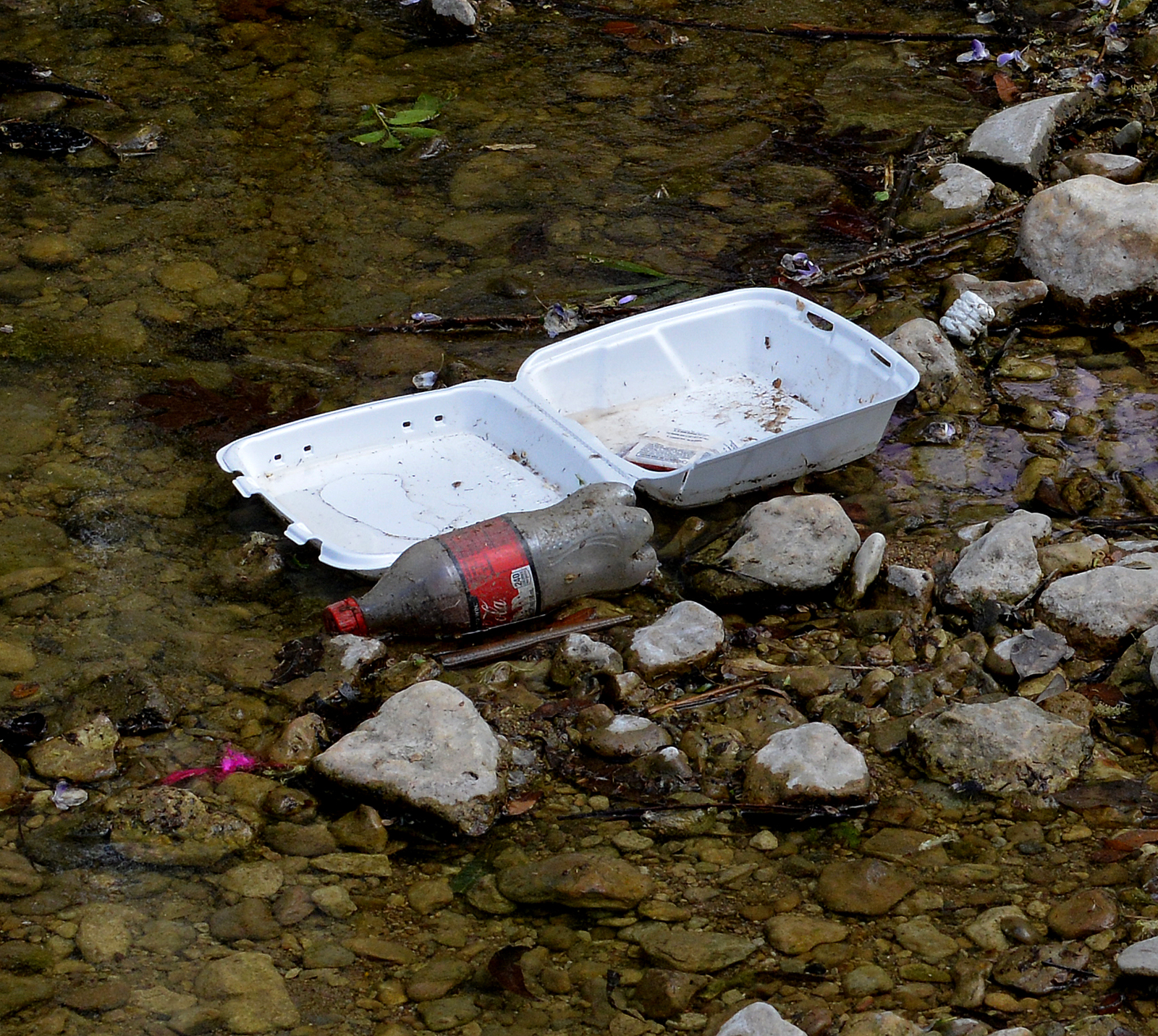 For example, I live along the Shoal Creek watershed in Austin, TX. This creek is often dry, prone to flooding and has been considered little more than a "drainage ditch" for urban storm water. Unfortunately, development decisions by the city impacted the natural springs that historically fed the creek. Significant erosion and frequent flooding has left the creek bed contaminated with garbage, and pollution from vehicles. The health of the creek is clearly visible as you encounter the creek by trail or as you pass over by bridge. The appearance is viscerally negative, and the ecological data supports the visual assessment. While I find the proximity of the creek to be supportive for accessing nature, I'm also confronted with a feeling of concern for the health of this ecosystem. I experience an empathetic concern for the quality, and vitality of the watershed. Clearly others sense a responsibility to care for this space as several community action groups have sprung up to restore and remake the Shoal Creek watershed. Yet, it is unclear what factors motivate this concern - nostalgia for local heritage, sense of community, personal use value, etc.
Experiencing
Nature: A matter of perception
Clearly, we are far from being able to determine the optimal levels or types of nature exposure for supporting well-being, or for cultivating empathetic values to protect the environment. Further, this may be different for different people and across different cultures, politics and socio-economic backgrounds - so I don't expect to develop a clear set of directives for a “nature diet.” Yet, each of us can begin to look at the pyramid and consider our own personal relationship with the natural world around us. It can open our eyes to seeing natural elements within, and beyond the built-environment that dominate our routine experience.
The
key here is our perceptions. The model is only as good as our ability
to recognize when we are in fact being exposed to nature. At higher
scales of the pyramid, such as a month-long wilderness adventure in
the Rockies, it may become relatively easy to perceive our immersion
in nature. Further, these types of experiences may also typify what
we culturally expect when talking about a nature experience. Yet,
this closes us off from being able to see more subtlety, those little
things that are often right in front of us. In other words, we each
have to take the time to stop and sense the roses.
Philosopher
David Abram talks about the critical role of sensing to know the
world around us. His most recent book, Becoming
Animal: An Earthly Cosmology is
a beautiful exploration of the subtle relations between the
human-sensing body and the material reality that envelopes us.
Throughout his book he invites the reader to explore the world
directly at hand, including both living and non-living things. In
fact, he goes into an exploration of non-living things as embodying
some degree of life, and part of the larger world that communicates
to us in every moment of our lives. Abram draws from the
phenomenological perspective of Merleau-Ponty in
bringing our attention to the immediacy and intimacy present in the
things around us, and between us. This view makes nature directly
experiential in every moment. Through our attention and intention it
is possible to develop this intimacy.
Aldo Leopold's own work is instructive in this area. The Sand County Almanac is an incredible example of attentiveness and intentionality with the landscape. Leopold took great care to describe the various lives of things coming and going. He delved into their histories of specific animals, plants and places. The repetitive, ongoing interactions, curiosity and reverence for the land are clear throughout. His own intimacy with the nature was key to both his capacity for narration and expression of those empathetic sensibilities. Now, most of us don't live in rural areas. Instead we live in urban environments with significant built structures shaping the ways we encounter and experience our environment. It is up to us to see the nature in our lives, but we must also become aware of the abuse that our environments incur upon nature - including ourselves and our communities.
In closing, these features point to the added role that personal narratives can have in connecting people to nature and in cultivating a sense of reverence. These narratives can focus our attention and provide space for directing our intentions to consciously engaging with the environment around us, or seek out nature opportunities as a part of our daily life. The culmination of different personal narratives can begin to reveal some of the more nuanced impacts that attention, intention, landscape structure and scale/duration that nature exposure has on personal sense of connectedness. Further we can also begin to develop a fuller theoretical understanding of the ways pro-environmental behavior can be cultivated.
And finally, we can develop counter theoretical understanding of the ways negative environments influence our personal sensibilities. These narratives provide the basis for interpretive analysis into the state of urban spaces, negative environmental structures and the dominant cultures that produce these environments.


