Saturday, February 22, 2014

The Role of Intention, Attention and Personal Narratives in Cultivating Nature Connectedness - (Part II)

Note this is the second part in my series on the nature pyramid, the land ethic and pro-environmental behavior.

In this article I explore the nature pyramid and the relationship between nature exposure, connectedness and pro-environmental behavior. I also consider ways to expand these ideas and their relevance to the larger issues of sustainability.

Defining the Nature Pyramid
The idea of the nature pyramid is still relatively new. Yet, it represents a potentially useful contribution for thinking about the relationship between human health, and nature in our lives. The basic premise suggests increased amounts of nature exposure will positively influence physical and mental well-being. As an example, the image below represents Tim Beatley's interpretation of the Nature Pyramid (See also: "Growing the Biophilic City"), which considers the scale, frequency, duration and intensity of immersion in nature. This is similar in terms of the foods we eat, how much of them, how often and so forth. 

The relationship between the nature pyramid and food pyramid may not be conceptually equivalent. But the concept provides a way to think about types of nature exposure, and impacts on people. As Beatley also suggests, it also highlights the importance of the ways we design urban spaces to include opportunities for residents to have access to various types of nature within their daily lives. Increasing the opportunities that urban residents have to interact with nature could be a critical feature to increasing urban well-being, as well as cultivating more empathetic concern for the environment. 


There is already evidence suggesting a relationship exists between nature exposure and positive measures of human health and well-being. Keith Tidball at Cornell University has been looking at the benefits of nature exposure on stress reduction among returning veterans with PTSD and other traumatic injuries ('Greening in the Red Zone'). Researchers have also found that experience with nature has a positive influence on a sense of connection to nature and well-being (Why Is Nature Beneficial?).

Connectedness and Attention/Intention
This sense of connection is critical, and it speaks to the formation of empathy and reverence for nature. Essentially, nature connectedness can be thought of as the affective, or underlying sense of partnership and self-other overlap that a person feels towards the environment. And it is here, at the intersection between nature experience and nature connectedness, that we find insight into the formation of a 'land ethic' (The connectedness to nature scale). 

Although environmental education programs can increase nature connectedness (Promoting connectedness with nature through environmental education), we also know from previous research that nature connectedness is positively correlated with nature exposure in general. Past research also shows that nature connectedness is positively associated with pro-environmental behavior such as recycling, organic food consumption, and gardening for sustainability (See Chapter 4).

However, we don't know what types of nature exposure increase these sensibilities, including the level or frequency and scale of experiences that influence nature connectedness.  The nature pyramid provides a framework for asking some of these questions. We can ask about relative influence that landscape types as well - forested, grassland, hilly, mountainous, etc. We can ask about length of exposure, or location (scale) such as neighborhood park, personal garden, or national park. Yet, directed attentiveness to our environments, or those underlying sensibilities we use to make meaning out of our environments prior to, and following nature exposure, is missing. 

Tom Bauer/Missoulian
There is also little work exploring the various activities people engage in within these environments. These activities may influence attentiveness to one's surroundings. For example, a leisurely stroll through a park on one's lunch break may have significantly different impact when compared to a brisk walk through a park as short-cut to an appointment. Thus, the value of our nature experience may ultimately rely on our capacities for perceiving nature around us in differing forms and scales throughout our daily lives. Working as a logger in a Pacific Northwest forest, may have a significantly different affect on a person's sense of connectedness when compared to nature hike through the same forest - or volunteering to plant trees in that forest.

 Photo by Larry Geddis, courtesy of Mt. Hood Territory
What we are doing may influence what we pay attention to. This suggests the importance of considering both our intention (doings) and attention (awareness) in living the everyday. 

Intention and attention in our daily routines can also be related back to the ways our environments are structured and designed. These structures provide and constrain opportunities for interactions with the environment. They can direct our attention, and influence our intentions as we move through space as part of our daily routines. 

For example, in a previous post I mentioned my experience with biking. I noted how I was drawn to back streets and trails to get from point A to point B. My intention was to go from my house to the grocery store and back (safely). Riding my bike along busy streets drew my attention to the number
of cars, the noise and exhaust fumes associated with this particular route. These experiences motivated a search for alternate routes. Eventually, I was able to minimize my exposure to busy roads. With the reduction in immediate safety concerns and distractions of road conditions I became more attentive to the built and natural structures along my route. That is not to say that nature was not present on the busier route. Instead my awareness was freer to experience the nature around me. The ability to relieve this stress not only contributes to my sense of well-being, but the alternative route made my decision to bike rather than drive to the store more enjoyable providing further incentives to make a pro-environmental choice.

But how does this relate to my experience of empathy towards nature? Now, I cannot say for sure as to the relevance of my own experience to larger groups of people. However, my experiences within nature have made me more attentive to living things and the landscapes I encounter within my environment. I'm often acutely aware of the "negative" attributes that characterize some of the landscapes I encounter. 
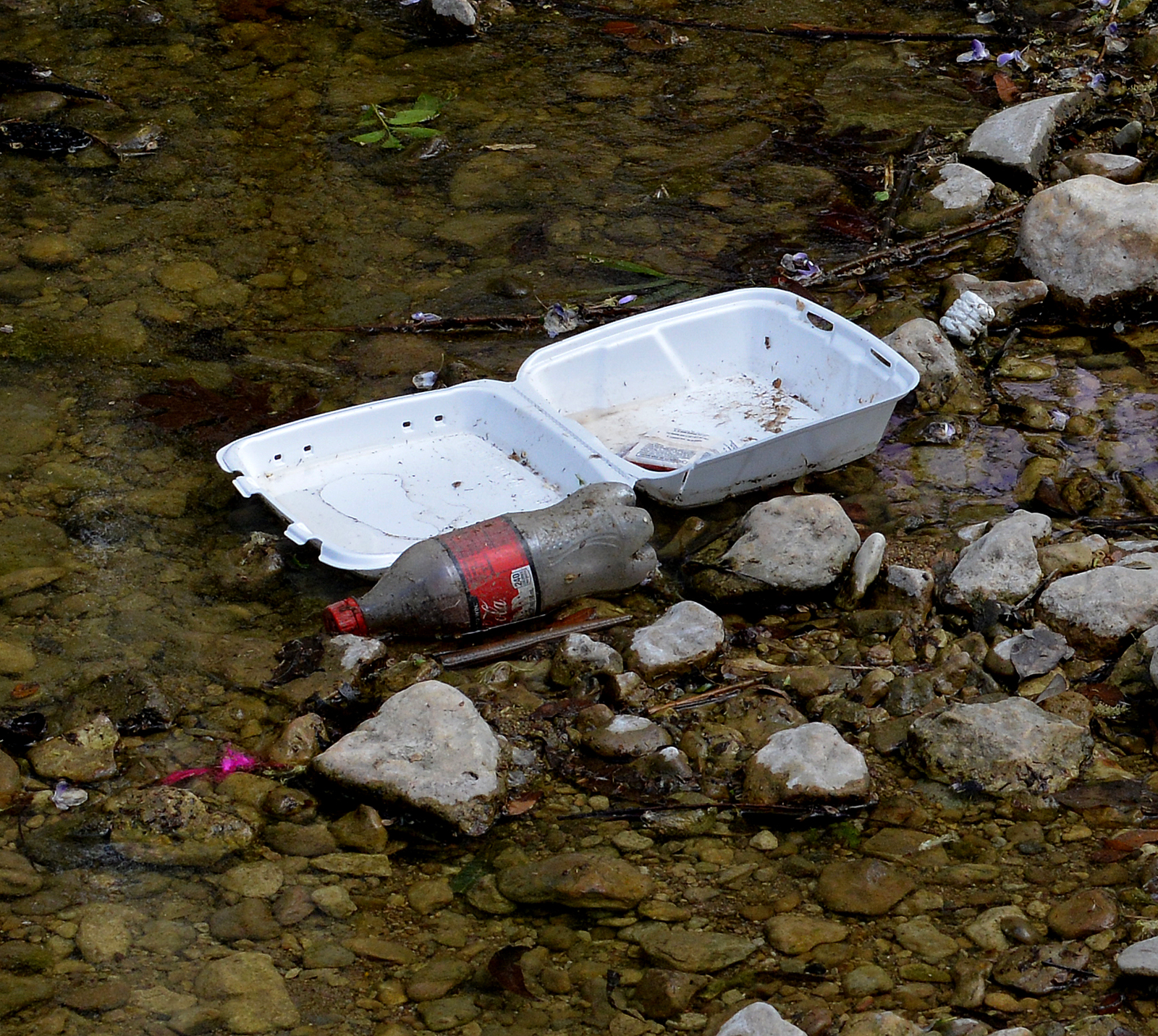
For example,  I live along the Shoal Creek watershed in Austin, TX. This creek is often dry, prone to flooding and has been considered little more than a "drainage ditch" for urban storm water. Unfortunately, development decisions by the city impacted the natural springs that historically fed the creek. Significant erosion and frequent flooding has left the creek bed contaminated with garbage, and pollution from vehicles. The health of the creek is clearly visible as you encounter the creek by trail or as you pass over by bridge. The appearance is viscerally negative, and the ecological data supports the visual assessment.  While I find the proximity of the creek to be supportive for accessing nature, I'm also confronted with a feeling of concern for the health of this ecosystem. I experience an empathetic concern for the quality, and vitality of the watershed. Clearly others sense a responsibility to care for this space as several community action groups have sprung up to restore and remake the Shoal Creek watershed. Yet, it is unclear what factors motivate this concern - nostalgia for local heritage, sense of community, personal use value, etc. 

Experiencing Nature: A matter of perception
Clearly, we are far from being able to determine the optimal levels or types of nature exposure for supporting well-being, or for cultivating empathetic values to protect the environment. Further, this may be different for different people and across different cultures, politics and socio-economic backgrounds - so I don't expect to develop a clear set of directives for a “nature diet.” Yet, each of us can begin to look at the pyramid and consider our own personal relationship with the natural world around us. It can open our eyes to seeing natural elements within, and beyond the built-environment that dominate our routine experience.

The key here is our perceptions. The model is only as good as our ability to recognize when we are in fact being exposed to nature. At higher scales of the pyramid, such as a month-long wilderness adventure in the Rockies, it may become relatively easy to perceive our immersion in nature. Further, these types of experiences may also typify what we culturally expect when talking about a nature experience. Yet, this closes us off from being able to see more subtlety, those little things that are often right in front of us. In other words, we each have to take the time to stop and sense the roses.

Philosopher David Abram talks about the critical role of sensing to know the world around us. His most recent book, Becoming Animal: An Earthly Cosmology is a beautiful exploration of the subtle relations between the human-sensing body and the material reality that envelopes us. Throughout his book he invites the reader to explore the world directly at hand, including both living and non-living things. In fact, he goes into an exploration of non-living things as embodying some degree of life, and part of the larger world that communicates to us in every moment of our lives. Abram draws from the phenomenological perspective of Merleau-Ponty in bringing our attention to the immediacy and intimacy present in the things around us, and between us. This view makes nature directly experiential in every moment. Through our attention and intention it is possible to develop this intimacy. 


Aldo Leopold's own work is instructive in this area. The Sand County Almanac is an incredible example of attentiveness and intentionality with the landscape. Leopold took great care to describe the various lives of things coming and going. He delved into their histories of specific animals, plants and places. The repetitive, ongoing interactions, curiosity and reverence for the land are clear throughout. His own intimacy with the nature was key to both his capacity for narration and expression of those empathetic sensibilities. Now, most of us don't live in rural areas. Instead we live in urban environments with significant built structures shaping the ways we encounter and experience our environment. It is up to us to see the nature in our lives, but we must also become aware of the abuse that our environments incur upon nature - including ourselves and our communities. 

In closing, these features point to the added role that personal narratives can have in connecting people to nature and in cultivating a sense of reverence. These narratives can focus our attention and provide space for directing our intentions to consciously engaging with the environment around us, or seek out nature opportunities as a part of our daily life. The culmination of different personal narratives can begin to reveal some of the more nuanced impacts that attention, intention, landscape structure and scale/duration that nature exposure has on personal sense of connectedness. Further we can also begin to develop a fuller theoretical understanding of the ways pro-environmental behavior can be cultivated. 

And finally, we can develop counter theoretical understanding of the ways negative environments influence our personal sensibilities. These narratives provide the basis for interpretive analysis into the state of urban spaces, negative environmental structures and the dominant cultures that produce these environments.

Tuesday, February 18, 2014

The Nature Pyramid, Empathy and Changing Behavior (Part 1)

Note: This is the first part in a series of short articles that explore the importance of nature exposure, empathy and awareness in motivating pro-environmental behavior.

Introduction
So here is the deal... climate change, and the irrecoverable damage we are incurring on the planet represent an immediate threat to our survival. Industrial expansion, mass consumption and the fetish for growth are accelerating species extinction, pollution and resource scarcity (See Report). The severity and scale of the problems we face requires a radical transformation of the ways we relate to the natural world, our landscapes and the living things that make up our environment.

In an effort to make this shift, Aldo Leopold talked about a new "land ethic" that challenges us to expand our sense of community beyond our ourselves to include other living things, and landscapes. Kathleen Dean Moore calls on people to practice "reverence," and to consider this reverence as part of a practice in seeking justice for those who have no say in the way things are progressing.


Overall, this ethic challenges us to see ourselves as existing within, rather than separate from nature; it challenges us to sense our place intimately, and to cultivate empathetic relations beyond our own species. It challenges us to act individually, and to work collectively to change the trajectory of unsustainable forms of living.


The Importance of Nature Experience
This transformation may be a difficult task as we are increasingly removed from the land, and what we might call nature. The average American spends nearly 90% of their time indoors insulated from the world "out there." In essence our daily lives have been cut-off from broader forms of nature.
At same time, our exposure to nature may be a critical dimension to living a healthy life, as well as to developing the ethical sensibilities that motivate a transformation of personal and collective behavior towards the environment.


The Nature Pyramid initially presented by Tanya Denckla Cobb, and expanded upon Tim Beatley provides a conceptual model for thinking about the quality and quantity of nature interactions, and the impacts on human well-being. Similar to the Food Pyramid, the Nature Pyramid is used to look at the connections between 'nature consumption' and the relationship with mental and physical health. As Beatley explains, the assumptions inherent within the model follow directly from E.O. Wilson's biophilia hypothesisBiophilia suggests that at some fundamental level we are hard-wired to seek out connections and express an affinity towards other living things.


Empathy, curiosity, and wonder all seem to be a part of this biophilic experience, and when we satisfy this aspect of our own evolutionary biology, we are renewed as individuals, and as a community. The absence of these experiences can undermine our development as full, emotional and physically healthy individuals. However, it may also undermine our capacities for feeling empathy for other species and the larger natural world that sustains our lives. This is important in that our nature experience may not be simply about the benefits we receive as individuals, but in developing a sense of connection to motivate new behaviors. Further, the ability to bridge self-interest and desire for altruism may increase the likelihood of behavior changes.

The importance of empathy
Indeed, empathy seems to be foundational to our most basic conceptualizations of justice and equity. Empathy is the ability to share another person's feelings. It is in our capacity to extend our sense of self -  those feelings of hurt, desire, love, hunger, fear, etc. towards others that provide the basis for caring beyond our own self-interest. Jeremy Rifkin's recent piece on empathy explores the evolutionary development of empathy in terms of our human species. He suggests that  the cultivation of empathy at larger scales to include the planet is part of the key to solving some our current environmental problems.

Check out this great video for his take on the importance of empathy and its development over the course of human evolution.


However, Rifkin notes that this evolutionary development is not a given, meaning we are not destined to reach some global form of empathic concern for the planet. Rather, this has to be cultivated in direct contrast to the hyper-individualism that dominates much of our popular socio-economic landscape (at least in North America). 

But how do we do this? Certainly ecological education at all stages of human development will play an important role. However, developing a sense of deep concern for nature requires more than just an intellectual understanding of ecological processes. Knowledge must accompany experience that feed into one another on a reoccurring basis to, both solidify and expand an intelligent, and mature emotional response to our natural surroundings. These experiences are what the nature pyramid emphasize. The multitude and variety of nature experiences, whether in a formal learning, or leisure context can be vital to developing the foundations for a new way of relating to our environment. This assumes a positive feedback loop where nature exposure can increase empathy for the natural community. This may influence pro-environmental behavior as an expression of this affinity for the natural world. Yet, to maintain this, continued contact and interaction is required. 

Ultimately, I believe that by using the nature pyramid, we can begin to consider the role of nature experience in cultivating empathy for our natural surroundings. This is an important an under realized area of research for understanding the pathways towards a sustainable society.  In the coming segments I will explore the nature pyramid in more depth as well as begin to think more deeply about specific research questions that might be significant to improving our understanding of the ways reverence and a 'land ethic' can be cultivated. 

Friday, August 23, 2013

What is the phenomena of sustainability? And why is it important?

Over the past few years I have become interested in exploring the experience of sustainability. My own personal experience has inspired new and exciting directions in my own research. I'm very interested in individual and collective efforts to adopt new lifestyles, and promote just relations with nature and people. I believe that our personal experiences with living ethically-motivated lives will reveal opportunities and limitations for creating a sustainable society. While invariably there will be differences in our lived experience, I sense that some common patterns exist.

These patterns may reveal important insights into some of the opportunities that individuals and civic groups can adopt and apply to cultivating sustainable livelihoods. At the same time, these patterns may also highlight forces that constrain people's abilities to live more ethically conscious lifestyles. The way we build and design our landscapes can inhibit and encourage new behaviors, but these landscapes may produce different experiences in terms of feelings of psychological well-being, or cultivate spiritual awareness of ourselves within a boarder ecology of place.

However, before I can move forward in this project I believe it is important to clarify the idea of sustainability, and what I mean by the phenomena of sustainability.


What is sustainability? 
This question often yields different answers depending on the person you ask. A common response I get is, "Doesn't it mean keeping things the same?" I usually respond by saying, "well, yes and no." Yes, to sustain something is to keep something in existence - to maintain something. For example, we are hopefully sustaining life, for ourselves, our families, future generations, and for other species. The concept of sustainability also suggests a radical transformation of the ways we currently relate to each other, and to the environment.

Insistence on personal and social transformation follows from a growing awareness that business as usual is actually threatening our very survival. Industrial production practices, the global distribution of goods, and patterns of mass consumption are at the center of significant social and environmental problems (UNCED 1992). Climate change, deforestation, scarcity of fresh water, and food insecurity are largely products of our "Fordist" economic system (Foster, Clark and York 2010). And although this system has been extremely successful, its benefits (and disadvantages) are experienced unequally around the world.

There is an increased disparity between rich and poor. This disparity is not just economic, but the burden of environmental degradation most often effects the poor. Municipal waste sites, and polluting industries are often located in poorer urban communities.


Rural communities are also often hit hard, especially where natural amenities are abundant. These places often become sites for extensive natural resource extraction. While mining, logging, fishing, and agriculture provide needed jobs for rural residents, these jobs come at a price that can diminish of natural landscape - polluted streams and lakes, clear-cut forests, loss of wildlife, and soil contamination.

Sustainability is about reconciling these disparities, while minimizing the impacts of human society on our environment, both now, and for future generations. This vision presents an alternative to human-environment relations that balances social equity, economic prosperity, and ecological health. This vision recognizes that, while imbalances are the consequence of Fordist models of material exchange, these disparities are also drivers of intensified patterns of production and consumption.


Sustainability calls for a transformation of human-environment relations. This includes new institutional arrangements. Inclusive governance at community, state, regional and international levels will be necessary. Business will need to internalize the social and environmental costs of their activities, which will for many entrepreneurs, require a rethinking of dominant models that adhere to uninhibited accumulation. But sustainability also calls upon a change among our personal relations with each other, our communities, and the environment. In a way, sustainability calls upon all of us to begin internalizing the larger impacts of our lifestyles, and call for greater degrees of personal and community self-reliance.

In the process of internalization - we find motivation to act in new or different ways. New information about the effects of our actions may indeed compel the desire to change our lifestyles. Yet those desires may also conflict with the ways society is currently constructed. Social norms, economic capabilities, physical space and the limits of time all constrain and direct a range of possible and probable choices that one may choose to act upon. But these choices may contradict with what we know, and value on deeply moral or ethical basis.


Connecting through Personal Experience
Recognizing these constraints and trade-offs have become apparent as I have tried to incorporate ethical values for social justice and the environment in my daily life. I have found excitement and frustration in my efforts. Trying to reduce my energy consumption, conserving water, buying fair trade, or local organic foods, growing more of my own food, and adopting a DIY lifestyle can be challenging. It is especially challenging in a world that is designed to facilitate mass consumption. It is also challenging due to basic physics of time and space.

These aren't just theoretical propositions, but lived experiences. This is at the heart of the phenomena of sustainability, and is my over-arching thesis:
That our lived experience of trying to live a sustainable life, will provide guidance to the constraints and opportunities before us, and may help guide efforts to create a more just and environmentally vibrant world.
Learning about sustainability takes time from other activities, and responsibilities. I have to negotiate my time with other things like PTA events, work, spending time with family and friends, helping the kids with homework, keeping an exercise routine, reading for enjoyment, house repairs, volunteering in my community, cooking, cleaning house, and commuting to all the places where these activities occur. Learning about gardening, and water conservation (and teaching the kids) also takes time, and commitment.

There is also the financial investment as well as the time investment. Buying local organic food from my local co-op can be significantly more expensive than shopping at the Super Wal-Mart. I can't buy cheap razors or toothpaste at the co-op, so I end up going to another location. This increases the time it takes to fulfill my material needs, as well as the personal energy required to get those items. Vegetable starts for the garden, preparing the soil for the garden, garden tools, equipment and other sundries all present a cost.

The constraints of time and space have been most revealing through my attempts to adopt a walking and biking lifestyle.  Moving through urban and rural landscapes by bus, bicycle and on foot have also shown a different dimension to the character and experience of my environment, and of the experience of sustainability.

I'm currently in Texas, in the summer, and it is ridiculously hot here. My daily bicycle ride to the grocery store is often determined by the time of day. But no matter what, I show up to my commitments sweaty. I'm sorry, but that degree of discomfort is always factored in my decisions to go anywhere. I have to really want, or need something. But the climate also encourages me to linger about, to cool off and grab a drink of water. These moments provide opportunities to engage with my neighbors, meet new people, and develop social relations that would be otherwise difficult in my normal hustle and flow car life.


The presence of bike lanes also structures my route choices, as much as distance structures my choice of stores and coffee shops I choose to visit. Just like climate determines my decision to go at all, close proximity to speeding cars, and the smell of exhaust fumes are all things I want to avoid. And I often take less direct routes to avoid these discomforts. I look for routes with trees that provide shade, or bike trails that run through urban green-belt. I avoid steep hills, but find deep
enjoyment traveling along a creek bed enveloped by hills, and covered by woodland and forests.

The contrast between these routes as micro-environments contained within the broader urban landscape has prompted another interesting realization. There is a certain beauty and enjoyment that draws me to these spaces, as much as I'm drawn to avoid other spaces. This experience appears to be driven by rational avoidance of discomfort as much as by a more indescribable spiritual desire for some quiet, and some nature. Yet, it is difficult to fully embrace the idea that these behavior choices are the product of rational conscious decision-making. Rather the characteristic drivers of these behavior patterns were only recognized while reflecting in the very moment of the experience. Insight came down to attention with intention.


I believe this spiritual, or psychological dimension of place is as important, to other dimensions of sustainability, and can be cultivated, or diminished as we move through our environment to meet our needs and fulfill our aspirations. Places can encourage interaction with others (human and non-human), or block those opportunities. Places can provide opportunities to cultivate awareness and connection with nature, or crowd out nature altogether. Furthermore, the ways we get there and our purpose for being in a place can also shape the interactions we have with others in our community.

These interactions and their effects can reinforce negative, or ameliorative activities just as physical space structures movement through our environments. The paradox experience of increased opportunities for solitude and for social interaction resulting from change my primary means of transportation has been intriguing.

With the frustrations, and process of assimilation to new lifestyle choices, there are have been opportunities that strengthen the decisions I have made. Interacting and learning from others about their experience, gardening techniques, and their DIY approaches to conservation provide a sense of encouragement and validation. There is also a sense of community that is created through a shared sense of interests, common concerns and experience. There is a social, as well internal sense of positive feedback that strengthens the commitment. We help one another, and so do our places.

Together, we find ways to creatively overcome some of the constraints, or at least begin articulating those concerns as part of a creative process. The growth of community gardens, the urban green-belt movement, bike-to-work programs and so forth are largely the consequence of these interactions, personal and social awareness, and effort to create new connections and spaces for sustainability.

As we act socially and personally in new ways that attempt to accord with our ethical values, we can all reflect back on these experiences -- the phenomena of sustainability help understand and guide new and innovating ways that cultivate these new relationships with each other and our environment. Through action, reflection, and action we create a feedback of intelligent adaptation, as well transformation of ourselves and our environment. This follows a type of theory of action and learning - the double-loop.


I believe there is a rich opportunity for carrying out a phenomenologically based research, and a place for the inclusion of direct experience in the process of learning and change for creating sustainable societies.
phenomenology is the study of “phenomena”: appearances of things, or things as they appear in our experience, or the ways we experience things, thus the meanings things have in our experience. Phenomenology studies conscious experience as experienced from the subjective or first person point of view. - Smith, David Woodruff, "Phenomenology", The Stanford Encyclopedia of Philosophy (Fall 2011 Edition), Edward N. Zalta (ed.)

It is important that this also connects with other approaches so that we can consider these interactions and assess the impacts and direction of our efforts at multiple temporal and spatial scales.

My goal moving forward with this blog will be to look at these experiences, our relations to each other, and the human-nature relationships that constrain and support sustainable living. I also plan to look at some of the underlying philosophies that frame dominant thinking, while opening critiquing myself and my assumptions in the process.


References:
O'Connor, Daniel. 2003. "A Crisis of Vision: Toward a More Integral Economics." Integral Ventures, LLC. Accessed at: http://www.catallaxis.com/2005/02/a_crisis_of_vis_1.html

Smith, David Woodruff, "Phenomenology", The Stanford Encyclopedia of Philosophy (Fall 2011 Edition), Edward N. Zalta (ed.)

UNCED. 1992. Agenda 21, Rio de Janerio, Brazil, 3 to 14 June. Accessed at: http://sustainabledevelopment.un.org/content/documents/Agenda21.pdf